

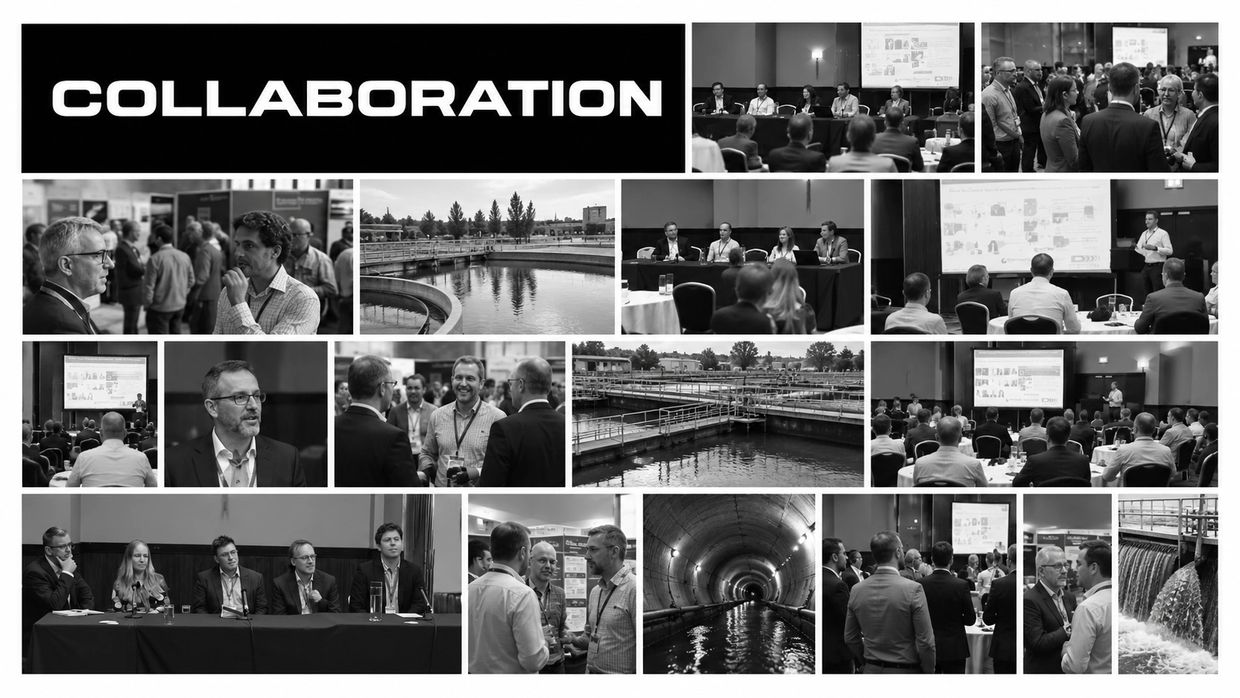
The Wastewater Performance & Resilience Congress 2026 brings together wastewater utility leaders, engineers, asset managers, operational specialists and selected solution providers to examine how the industry can deliver more dependable, measurable and resilient performance across entire networks, treatment systems and catchments.
Building on a well-received inaugural event, our second-year congress broadens the conversation from smart wastewater technologies to the bigger questions of investment effectiveness, asset reliability, operational performance and resilience through the remainder of AMP8 and towards 2030.
The first year focused primarily on smart wastewater technologies, monitoring and data. For 2026, we're building on that foundation and moving the conversation towards what actually delivers better wastewater performance, how improvements can be sustained and what it takes to achieve them consistently across thousands of assets.
Three Weeks Of Research. A Broader Strategic Perspective.
We spent the best part of three weeks researching this year's event, speaking directly to wastewater utilities across England, Wales and Scotland, as well as Northern and Eastern Europe, Greece and further afield.
This time, we deliberately extended the consultation to more senior strategic decision-makers, including wastewater utility CEOs, alongside those responsible for investment, engineering, asset management, operations and performance.
That brought a different perspective to the programme.
Where should investment be prioritised? Which failures carry the greatest consequences? How can utilities recover more capacity from existing infrastructure? When should assets be rehabilitated rather than replaced? How do we move from reactive maintenance towards preventing failures? And how do we prove that investments have delivered measurable improvements?
UK-Focused, With A Wider Northern European Perspective
The congress is grounded in the challenges facing UK wastewater utilities, particularly AMP8 delivery, environmental performance, regulatory scrutiny, asset reliability and system-wide resilience.
But our research also highlighted how much common ground exists with utilities in countries such as the Netherlands, Belgium, Greece and Denmark.
Ageing infrastructure, infiltration, stormwater management, treatment capacity and increasingly variable weather conditions are shared concerns. Historically wetter regions are also having to adapt to drought and low-flow conditions, bringing different pressures on wastewater networks, treatment processes and receiving waters.
We also found interest from utilities in France, Portugal and the Middle East in learning from the UK's experience.
With the UK wastewater industry operating under intense regulatory and public scrutiny, there is considerable value in examining what is working, what is proving difficult and what other utilities can learn from both.
Relevant, Properly Curated Content — From Investment Decisions To Operational Performance
The congress follows the decisions that determine whether wastewater systems become genuinely more dependable.
A central theme is the need to prevent major, high-consequence failures while systematically eliminating the smaller recurring weaknesses that undermine everyday performance.
When does repeated maintenance justify a capital intervention? How much hydraulic capacity can realistically be recovered? Which safeguards are critical to preventing serious incidents? And how do we distinguish genuine performance improvement from the effects of favourable weather?
The emphasis is on connecting investment, engineering, operations and measurable results — not treating them as separate challenges.
One Room. One Shared Conversation.
For our second year, we're aiming to bring together 100–200 participants, while retaining the highly interactive character of the inaugural event.
There will be one principal conference room and one shared agenda, rather than multiple competing streams.
When a utility shares an important lesson, everybody hears it. When a challenging question comes from the audience, everybody benefits from the answer. And when discussions continue over coffee or lunch, delegates share the same context.
Our aim is to bring more utility experience and more perspectives into the room without losing the accessibility and quality of discussion that made the first year so valuable.
More Utilities. More Discussion. Less PowerPoint.
Our format is designed to get beyond the presentations and into the decisions, evidence and practical lessons behind them.
A typical session combines three focused 20-minute presentations followed by approximately 40 minutes of moderated panel discussion and audience Q&A.
What worked? What didn't? What did it cost? What proved difficult during implementation? Did the expected benefits materialise? Would the utility make the same decision again?
Roundtables provide further opportunities to compare experience and bring together lessons from different sessions.
Our chairs are closely involved in the research and agenda development. They understand the questions behind each session and help connect speakers' contributions into a more useful industry discussion.
The Q&A is not an afterthought. It's a fundamental part of the programme.
Utility-Led. Solution-Focused. Not Vendor-Driven.
Technology providers, engineering consultancies and specialist suppliers have an important contribution to make, particularly when they can demonstrate how a solution has addressed a genuine wastewater problem.
Our first year showed how well this can work when commercial presentations are limited, carefully selected and based on practical utility case studies.
We intend to retain that balance.
Whether the subject is recovering hydraulic capacity, improving reliability, preventing pollution incidents or strengthening operational performance, the emphasis is on the problem, the intervention, the evidence and the results — not a sales pitch.
What We Hope You Take Back To Your Organisation
We want delegates to leave with a better understanding of how other utilities are approaching the same challenges they face, and useful ideas to explore within their own organisations.
That might mean reconsidering an investment priority, examining a different maintenance strategy, asking better questions about asset reliability or identifying an approach to recovering capacity that deserves closer investigation.
It could also mean understanding why a particular intervention worked in one catchment but might not deliver the same results elsewhere.
Through utility case studies, extended Q&A and peer discussion, there should be plenty of opportunities to challenge assumptions, compare evidence and examine what can realistically be applied elsewhere.
Ultimately, this congress is about bringing the right people together to discuss how wastewater performance can be improved in practice — making better investment decisions, preventing avoidable failures, getting more from existing assets and delivering improvements that can be measured and sustained.
Properly researched. Utility-led. Technically credible. Focused on better wastewater performance in the real world.